
Understanding “how much do minor league baseball players make” matters to fans and families because MiLB operates on a different pay structure than most jobs: players earn weekly salaries over a short, roughly five-month season, and income varies greatly by level from Rookie ball to Triple-A. This FlagOh Fanatics guide simplifies updated salary standards and real examples so you can see what minor leaguers truly earn.
Understanding How Minor League Salaries Work
If you want to know “how much do minor league baseball players make”, the first step, as FlagOh Fanatics highlights, is looking at how their pay is structured because it works very differently from a typical full-time salary.
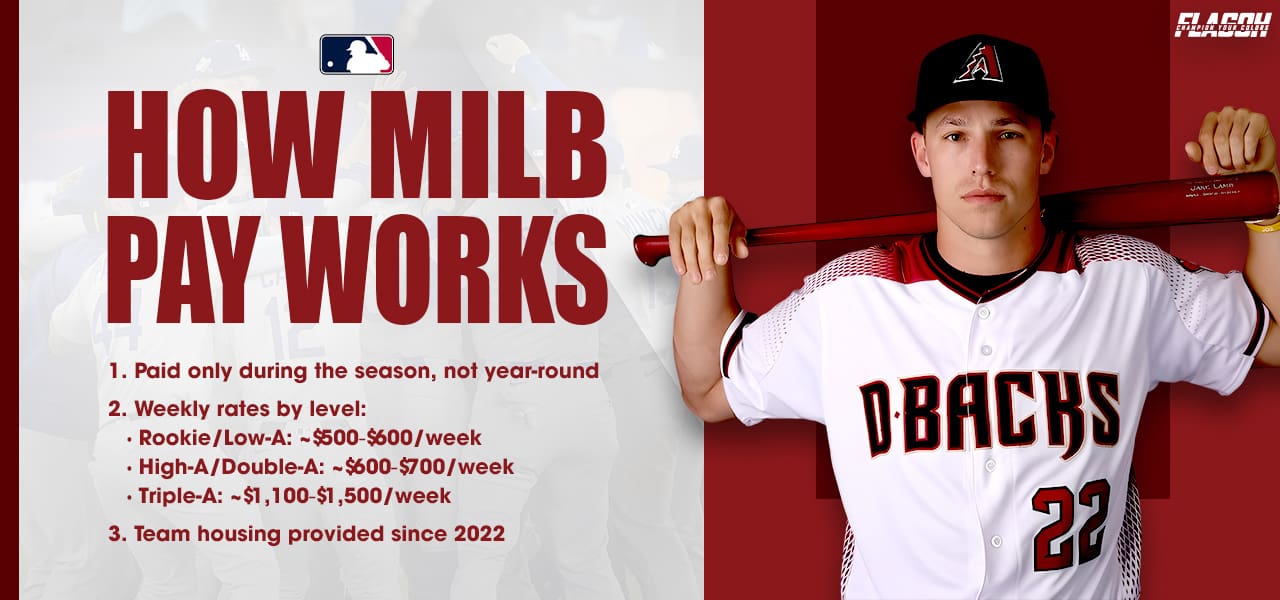
Minor leaguers don’t earn money all year. Their contracts only cover the competitive season, usually about five months. During that time, they’re paid a fixed weekly rate based on their level. For example, if a High-A player earns $700 per week over a 22-week season, their total seasonal income is around $15,400 before taxes—and that’s before factoring in living costs, taxes, and any bonuses.
Since 2022, MLB rules have also changed the financial picture off the field. Most players now receive team-provided housing, which can remove one of their biggest monthly expenses, but other costs (food, travel, clubhouse dues, equipment) still come out of their own pocket and directly affect what they actually keep.
Key points to remember:
- Minor league players are not paid during spring training.
They only earn their salary during the regular season, not the offseason. - At most levels, teams now provide housing, which helps offset low base pay.
Because of this weekly, season-only structure, calculating a player’s true earnings becomes more complicated than simply quoting a traditional “yearly salary” figure.
What Affects How Much Minor League Baseball Players Make
Anyone asking how much minor league baseball players make has to look beyond the base weekly rate. What a player actually takes home over a season depends on several layers of income and support that can vary widely from one prospect to another.
Signing Bonuses
For many drafted players, the signing bonus is the biggest single payday they see for years. Depending on draft position, bonuses can range from just a few thousand dollars to several million. High-round picks may use that money to cover living costs, training, and travel while they earn low minor league salaries, especially at Rookie and A-ball. Late-round picks or undrafted players often receive very small bonuses, so they rely much more on their regular MiLB paycheck.
Housing and Per Diem
Housing used to be one of the biggest financial headaches in the minors, with players crammed into shared apartments or host families just to save money. Under newer rules, teams now typically provide housing at most levels, which effectively raises a player’s “real” income because they’re not paying rent out of a small salary. On the road, players receive a daily meal allowance (per diem), but clubhouse dues, tips, and extra food costs can still eat into that support.
Level of Play and Promotions
The difference between levels is not just about competition—it’s also about money. Weekly salaries rise as players climb from Rookie ball to Low-A, High-A, Double-A, and eventually Triple-A. A promotion can mean hundreds of extra dollars per week over the course of a full minor league schedule, which adds up to a meaningful jump in total earnings. Players who reach Triple-A or land on the 40-man roster see the biggest increase, especially if they are briefly called up to MLB.
Taken together, bonuses, housing, per diem, and level of play explain why two players in the same organization can have completely different financial realities, even though the basic pay scale may appear standardized on paper.
How Much Do Triple-A Baseball Players Make
When fans ask “how much do Triple-A baseball players make?”, they’re really asking what life looks like financially for the players who are just one step below the majors. Triple-A is the top tier of the minor league ladder, so salaries are higher than at any other MiLB level—but still far from MLB money for most players, a gap this FlagOh breakdown helps make much easier to see.
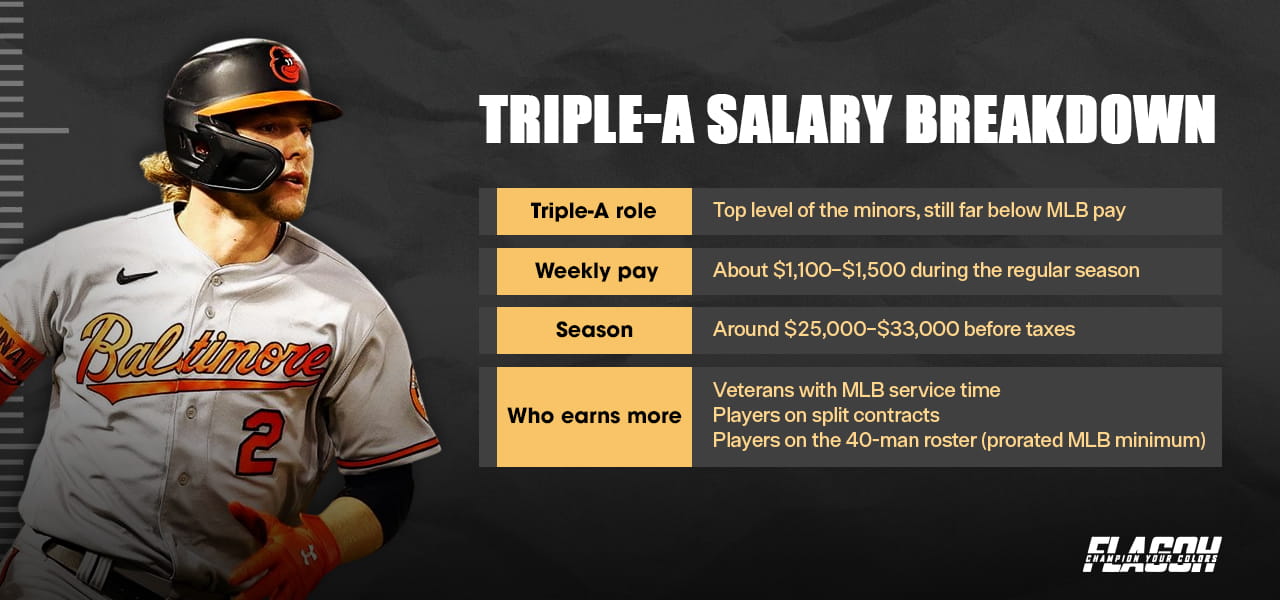
In most cases, a Triple-A player’s base pay falls in a rough band of about $1,100–$1,500 per week during the regular season. Over a typical 22–24 week schedule, that usually works out to around $25,000–$33,000 per season before taxes. That’s the range many career minor leaguers and up-and-coming prospects live in, even though they’re facing top-level competition and constant pressure to perform.
Where things change is experience and contract type.
- Veterans with previous MLB service time can negotiate stronger deals and may earn noticeably more than younger teammates.
- Players on split contracts—deals that pay one rate in Triple-A and a much higher rate in MLB—sit in a completely different income bracket once they’re called up.
- Being added to the 40-man roster is a game-changer: even a short stint in the majors means a pro-rated slice of the MLB minimum salary (over $740,000 annually), which can instantly surpass an entire Triple-A season’s income.
So the reality is that most Triple-A players earn a solid but modest seasonal salary compared to the big leagues, and the real financial leap only happens when a player’s phone rings and they finally step onto a Major League field.
How Much Do Minor League Players Make in the Offseason
Many people hear “how much do minor league baseball players make” and imagine a steady, year-round paycheck, but the reality is very different. For most players, income stops as soon as the regular season ends, turning the offseason into a period where they still train like professionals but usually don’t receive a team salary at all.
To cover basic living costs and stay in game shape, many players piece together income from different sources, such as:
- Winter league salaries or short-term contracts abroad
- Private coaching lessons and youth camps
- Working at training facilities or baseball academies
- Retail, service, or other part-time jobs
- Stretching whatever remains of their signing bonus
On top of that, offseason training isn’t free. Players often pay out of pocket for gym memberships, field time, equipment, nutrition, and sometimes private trainers. This mismatch—no salary but ongoing expenses—is a big reason why understanding how much money minor league baseball players make has to include both the short season they’re paid for and the financial pressure they face the rest of the year.
The Pay Gap Between MLB and the Minor Leagues
To really understand “how much do minor league baseball players make”, you have to place their salaries side by side with MLB pay, because the gap is so large it completely reshapes what a baseball career looks like at each level.
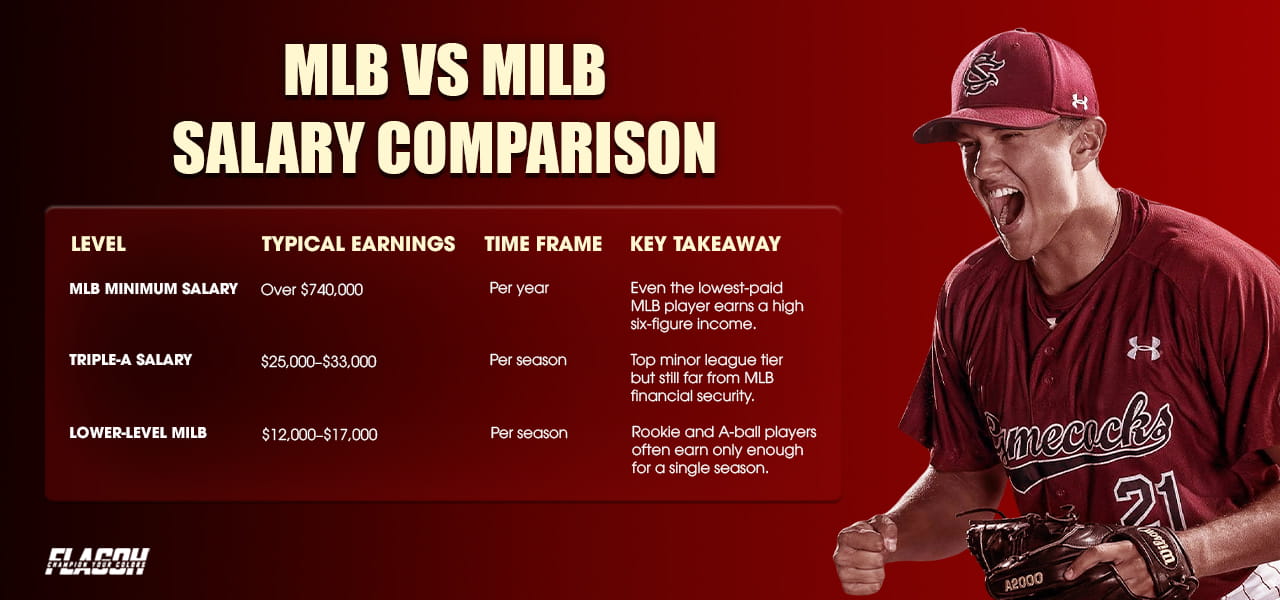
- MLB minimum salary: Over $740,000 per year, giving even the lowest-paid big leaguer a six-figure income that can surpass what many minor leaguers earn across several seasons combined.
- Typical Triple-A salary: About $25,000–$33,000 per season, reflecting the highest minor league tier where players are closest to the majors but still far from long-term financial security.
- Lower-level MiLB salaries: Often range from $12,000–$17,000 per season, covering Rookie and A-level players who are still developing and usually earning just enough to stay on the field for one competitive season.
A single week of MLB pay can exceed an entire minor league season. That means a brief call-up doesn’t just feel like a promotion on the field—it can instantly reshape a player’s savings, debt, and ability to support their family. For players grinding in Double-A or Triple-A, every roster move, every injury, and every front-office decision can carry a massive financial weight, not just a competitive one.
These salary gaps also influence how players and their agents approach career planning. Some may chase opportunities overseas, others might retire earlier than expected, and many rely heavily on signing bonuses or off-field income to bridge the years spent in the minors. In short, the economic distance between MLB and MiLB shapes not only what players earn, but how long they can realistically afford to keep chasing the big-league dream.
Quick Answers About Minor League Baseball Salaries
Wondering how much money minor league baseball players actually take home after taxes and expenses? This section gives fast, straight-to-the-point answers on pay, bonuses, costs, and basic benefits.
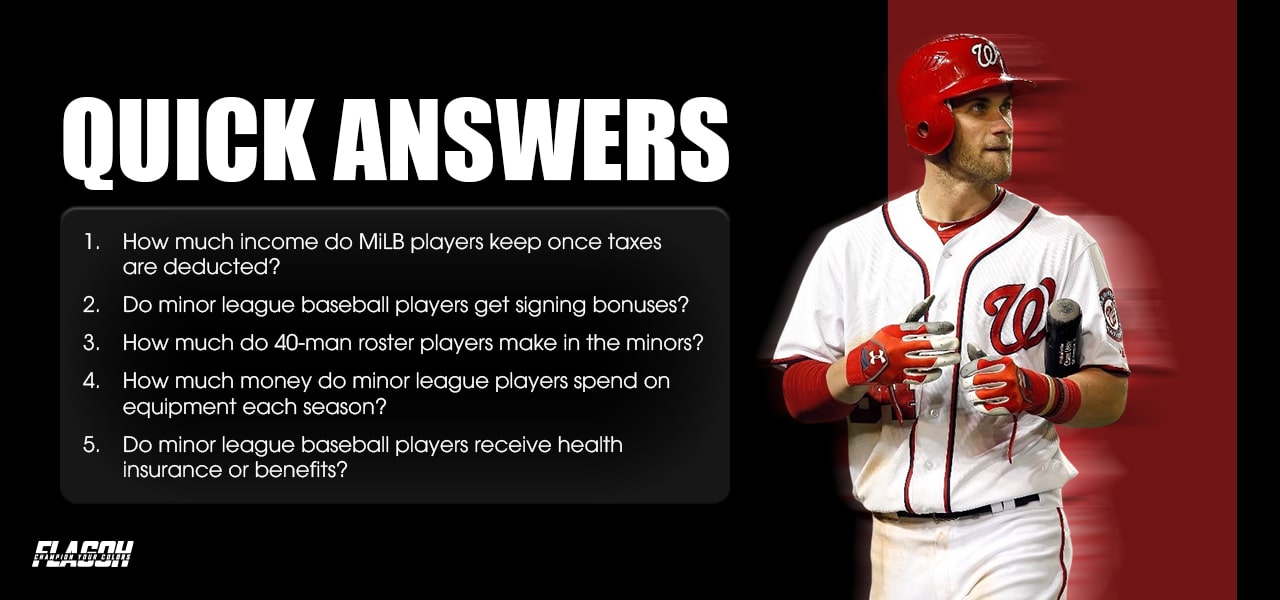
How much income do MiLB players keep once taxes are deducted?
Usually 15–25% less than their listed salary, depending on taxes and dues.
Do minor league baseball players get signing bonuses?
Yes. Bonuses can range from a few thousand dollars to millions for top picks.
How much do 40-man roster players make in the minors?
Often six figures, plus a pro-rated share of MLB salary when called up.
How much money do minor league players spend on equipment each season?
Roughly $1,000–$2,500 per season on bats, gloves, cleats, and gear.
Do minor league baseball players receive health insurance or benefits?
Most get basic in-season coverage, with details varying by team and level.
Minor league salaries are still complicated, with income shaped by level, bonuses, call-ups, and living costs—so knowing “how much do minor league baseball players make” puts the grind into perspective. If you love the stories, rivalries, and emotion behind those numbers, explore the FlagOh Fanatics to find pieces that let you wear your passion every time you watch the game.