
If your ball feels slick, dusty, or just “off,” this How To Clean A Basketball guide shows you how to identify the cover, clean it step-by-step, disinfect safely, and finish with correct drying, PSI (pounds per square inch), and storage to keep grip and hygiene consistent. FlagOh Fanatics built this for players, coaches, and schools who want a clean, game-ready ball.
Reasons to Clean Your Basketball and Material Basics
Before diving into how to clean a basketball, it’s important to understand how proper maintenance impacts grip, hygiene, and longevity. FlagOh Fanatics emphasizes that a well-kept basketball doesn’t just look better—it performs better. With a mix of quick wipe-downs after play and scheduled deep cleans, you can preserve control, hygiene, and lifespan across every game and season.

Why Cleaning Matters: Grip, Hygiene & Lifespan
- Consistent Grip & Safer Handling: A clean ball maintains its micro-texture for predictable control. Oils, dust, and court residue create slick spots; removing them restores tackiness, minimizes fumbles, and keeps shooting feel consistent.
- Hygiene for Shared Use: When balls are shared in schools or gyms, they transfer germs easily. Use an EPA List N disinfectant, keeping the surface visibly wet for the required contact time to ensure effective sanitization.
- Longer Lifespan & Lower Costs: Dirt and residue cause seam lift, swelling, and glazing that shorten a ball’s life. A dry wipe after every game and a weekly pH-neutral wash save more than frequent replacements.
- Routine for Best Results: We recommend pairing light after-play wipe-downs with periodic deep cleans to maintain performance and extend durability.
Identify leather, composite, and rubber
Start with a quick material check so every later step fits the surface.
- Leather (indoor): visible pores, supple feel → never soak, minimal moisture.
- Composite (synthetic leather): leather-like, semi-porous → tolerates careful disinfection.
- Rubber (outdoor): durable, deep channels → fine with light scrubbing and distilled water passes for salt.
Tools and safe ratios with pH-neutral soap
- Two microfiber cloths (300–400 GSM): one soapy, one for rinse-wipe
- Soft nylon detail brush for channels/logos
- Dilution: ~1–2 mL pH-neutral soap per 500 mL water (~0.2–0.4%)
- Distilled water if you see mineral/salt rings
Common mistakes to avoid
- Over-wetting leather or pressure-washing any cover
- Bleach/acetone; fragranced wipes that leave residue
- Skipping the rinse-wipe (causes a slick feel)
- Drying with heat/UV (warps panels, fades logos)
How to Clean a Basketball Step-by-Step for Each Material
Use this section to put the steps into practice—skim the quick table, then follow the material-specific bullets. For multi-ball programs, log date, product, contact time, and “OK to play”; need to know “How To Clean A Basketball?”, FlagOh Fanatics’ simple checklist ensures a consistent clean.
Coach’s Tip: For school teams, pre-label spray bottles by color—blue for soap mix, green for disinfectant—to prevent overuse or chemical mixing.
Leather (Indoor)
Supplies
- Microfiber 300–400 GSM (2 cloths)
- pH-neutral soap (1–2 mL / 500 mL water)
- Leather-safe disinfectant (only if label says leather-safe)
Steps
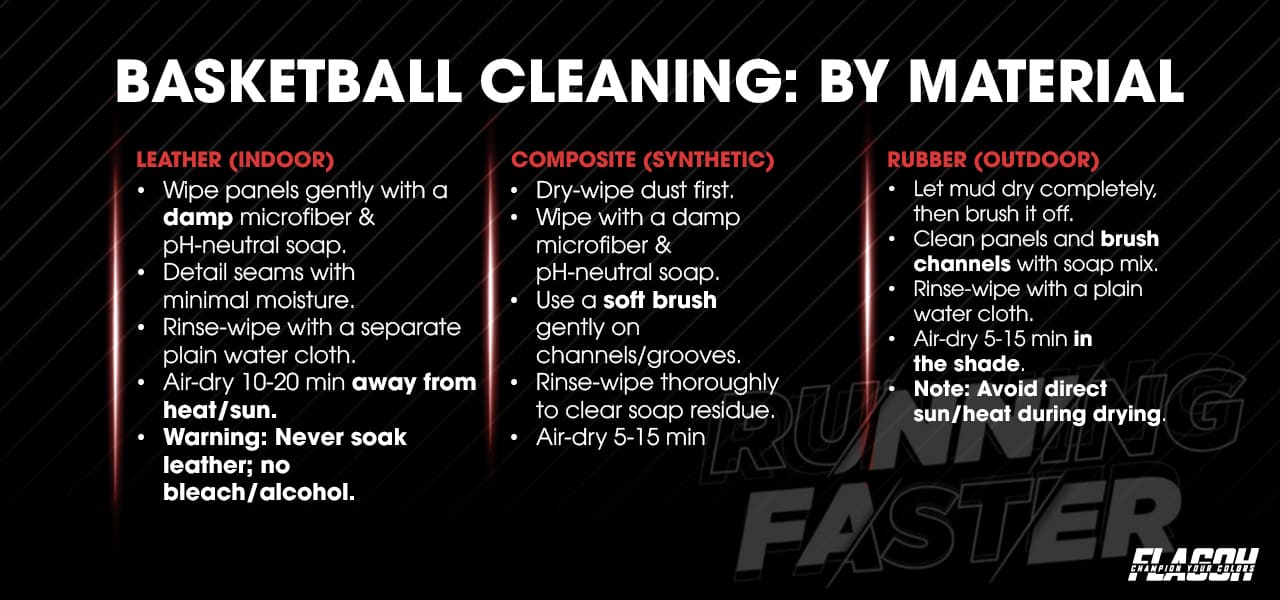
- Dry-wipe the entire surface to lift dust.
- Dampen (not soak) a clean microfiber with the soap mix; light circular wipes per panel.
- Detail seams with minimal moisture; avoid forcing liquid under edges.
- Rinse-wipe with a second damp cloth (plain water) to remove residue.
- Air-dry 10–20 minutes away from heat/UV.
- Disinfect (optional): apply leather-safe product and hold label contact time; do not use alcohol/bleach.
Time: ~8–12 min (plus contact time if disinfecting)
Warnings: Never soak; no heat/UV; avoid acetone/bleach; spot-test any new product.
Composite (Synthetic Leather)
Supplies
- Microfiber 300–400 GSM (2 cloths)
- pH-neutral soap (0.2–0.4% ≈ 1–2 mL / 500 mL)
- Soft nylon detail brush
- 70% isopropyl alcohol (IPA) or quats disinfectant if the label allows composite
Steps
- Dry wipe to remove loose dust and oils.
- Soap passes with a damp microfiber, which makes small circular motions.
- Brush channels gently to lift grit from grooves and logos.
- Rinse-wipe (plain water) to clear surfactant residue (prevents slickness).
- Disinfect only if the label approves composite; keep the surface visibly wet for full contact time.
- Air-dry 5–15 minutes with airflow; no heat.
Time: ~7–10 min (+ contact time if disinfecting)
Tip: If tack feels muted after drying, repeat rinse-wipe only—it’s usually residue, not under-cleaning.
Rubber (Outdoor)
Supplies
- Microfiber 300–400 GSM (2 cloths)
- pH-neutral soap (1–2 mL / 500 mL)
- Soft nylon detail brush
- Distilled water (for road salt/mineral rings)
- Disinfectant (70% IPA or quats) per label
Steps
- Let mud dry, then brush off (don’t smear wet mud).
- Soap the panels with light, even pressure; brush channels thoroughly.
- Rinse-wipe (plain water) to remove soap.
- Distilled water passes to dissolve salt/mineral residue.
- Disinfect if needed and label-approved; keep surface wet for full contact time.
- Air-dry 5–15 minutes in shade; avoid sun/heat.
Time: ~8–12 min (+ contact time if disinfecting)
Note: Outdoor grit acts like sandpaper—regular brushing protects panels.
Stain & scuff removal
Leather (indoor)
- Soap + water, damp microfiber; light circular passes.
- No acetone/strong solvents; spot-test leather-safe cleaner only.
- Repeat across sessions for stubborn ink; patience protects grain.
Composite
- Start with soap + water.
- Use a very light melamine touch on the mark only.
- Rinse-wipe; air-dry to avoid slick patches.
Rubber
- Soap scrub with a nylon brush.
- For transfer marks, do a second pass; then rinse-wipe and air-dry.
60-Second sideline clean
Supplies
- Dry microfiber, damp microfiber (pH-neutral mix)
- Approved disinfectant wipe (composite/rubber only)
Steps (≈60–90 s total)
- Dry wipe to lift dust/oils.
- Damp wipe panels in quick circles.
- Disinfect swipe (if label allows composite/rubber); keep surface wet briefly per wipe directions.
- Air-dry 1–2 minutes; no heat.
Pro setup: Tray with dry cloth / damp cloth / approved wipe—reset after each game.
How to Disinfect a Basketball Safely and Protect the Grip
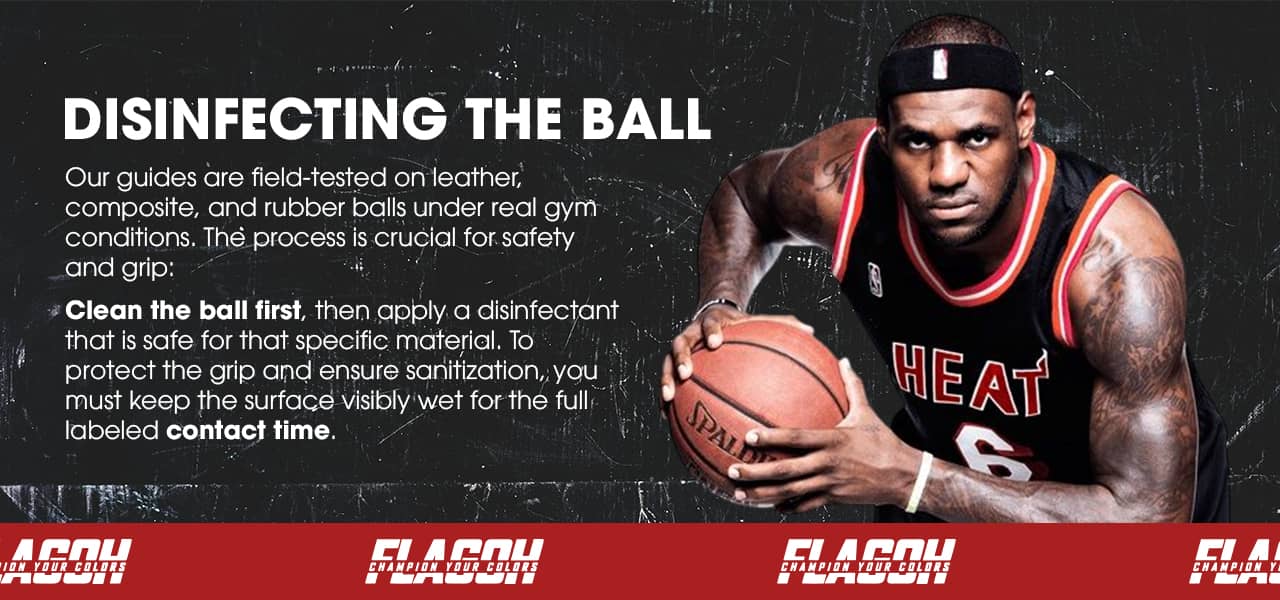
Our guides are field-tested on leather, composite, and rubber balls under real gym conditions and reviewed by certified trainers each season. Clean the ball first, then apply a product that lists your cover (leather/composite/rubber) and keep the surface visibly wet for the full labeled contact time to protect grip.
| Cover | Allowed cleaners | Disinfectants (if label allows) | Rinse needed? | Common mistakes |
| Leather | pH-neutral soap (0.2–0.4%) | Leather-safe only (avoid IPA/quats unless label says leather-safe) | Usually no; follow label | Over-wetting, heat/UV |
| Composite | pH-neutral soap | 70% IPA or quats if explicitly approved | Yes, if residue/tack muted | Fragranced wipes |
| Rubber | pH-neutral soap | 70% IPA or quats per label | Often yes | Skipping rinse after gym sprays |
If you’re cleaning a basketball, choose a disinfectant that matches the cover and follow the labeled contact time.
Alcohol, quats, and “sports” wipes
- 70% Isopropyl Alcohol (IPA)
- Pros: Fast action, easy to source.
- Cons: Can dry out leather; generally better for composite/rubber.
- Quaternary Ammonium (“quats”)
- Pros: Broad efficacy, common in gym sprays/wipes.
- Cons: May leave residue; finish with a plain-water wipe if label permits.
- “Sports” or leather-safe wipes/sprays
- Pros: Designed for porous covers; gentler on leather.
- Cons: Always verify compatibility and directions.
Why pH and Contact Time Matter
- A pH-neutral (6.5–7.5) cleaner preserves adhesive polymer bonds in synthetic leather.
- Surfactants break down oils that flatten the micro-texture; correct contact time lets disinfectants denature bacteria without drying the cover.
Choose disinfectant based on material and residue risk
- Leather: Prefer leather-safe products; when in doubt, clean thoroughly and allow full dry time rather than risk drying the cover.
- Composite / Rubber: More flexible; follow labels exactly, avoid fragranced products that leave films.
Contact time and label directions
“Contact time” means the surface must stay visibly wet for the full time printed on the label—often 30–600 seconds. Ventilate the area, wear gloves if advised, and never mix chemicals.
Safety & Compliance Callout
- Always follow the disinfectant label exactly.
- Never mix chemicals.
- Use nitrile gloves and ventilate your space.
- Store cleaning agents between 15–25 °C, away from sunlight.
Best way to sanitize a basketball without bleach
Looking for a bleach-free routine that keeps tack? Use a product your label lists for athletic gear and match it to your cover (leather-safe for leather; 70% IPA or quats for composite/rubber if allowed).
- Pre-clean with a damp microfiber and pH-neutral soap (light dilution) to remove films.
- Apply disinfectant compatible with your material; wet the surface evenly.
- Hold contact time exactly as labeled (commonly 30–600 seconds) while the ball stays visibly wet.
- Optional rinse-wipe (if the label permits) to reduce residue and speed tack recovery.
- Air-dry away from heat/UV. (Label shelves “leather-safe” or “composite/rubber” for quick picks.)
Restore basketball grip
If the ball feels clean but slick, residue is usually the culprit—not lack of disinfectant.
- Do a plain-water rinse-wipe, then a quick tack test; repeat the rinse-wipe only if slickness remains.
- Channel focus: Soft nylon detail brush along grooves; wipe away lifted residue.
- Dry window: 5–15 minutes with airflow; avoid heat.
- Leather caution: Skip solvents; use a minimal-moisture wipe and extend dry time.
Drying, PSI, and Storage Tips After Cleaning A Basketball
Once you’ve completed the how to clean a basketball process and disinfection, lock in performance with proper drying, PSI, and storage—FlagOh Fanatics’ quick checklist makes this step simple.
Air-dry only
Let the ball air-dry for 5–20 minutes, depending on the cover and humidity. Avoid heat guns, hair dryers, and direct sun (warps panels, fades logos).
Youth ball note: Youth sizes typically follow women’s range; verify on ball stamp or maker’s page.
Set the proper PSI
Re-inflate and check with a reliable gauge: 7.5–8.5 PSI (men’s) and 6.5–7.5 PSI (women’s). Proper pressure restores bounce and feel after moisture exposure.
Store for consistency
Keep balls at 15–25 °C and 40–60% RH in a ventilated area. Use a breathable bag or shelf; avoid sealed bins, damp garages, and sun-exposed windows.
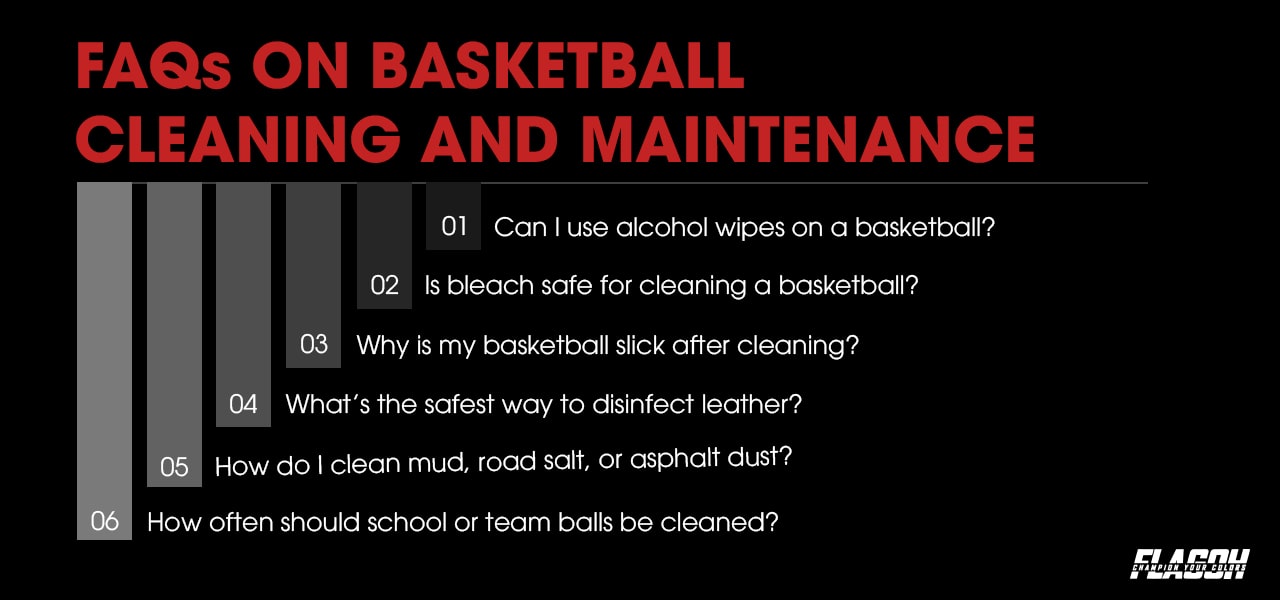
FAQs on Basketball Cleaning and Maintenance
Searching “How To Clean A Basketball”? Get fast, friendly guidance on cleaning routines, what to buy, contact times, and disinfecting the right way.
Can I use alcohol wipes on a basketball?
Yes on composite/rubber if the label approves. Avoid leather unless a product is explicitly leather-safe.
What’s the safest way to disinfect leather?
Use a leather-safe formula as labeled, or rely on thorough cleaning plus full dry time. Never soak leather.
How long should disinfectant stay on the surface?
Follow the label’s contact time—commonly 30–600 seconds—and keep the surface visibly wet.
What soap-to-water ratio is best for rubber or composite?
About 1–2 mL pH-neutral soap per 500 mL water (~0.2–0.4%).
How do I remove a pen or marker safely?
See Stain & scuff removal in the methods section for leather/composite/rubber specifics; start with soap + water, then follow the material rules.
Why is my basketball slick after cleaning?
Usually, residue—see Restore basketball grip (no-residue method) for a quick rinse-wipe routine and channel brushing.
Is bleach safe for cleaning a basketball?
Avoid bleach on all covers (discoloration, fiber damage), especially on leather.
How do I clean mud, road salt, or asphalt dust?
Let mud dry and brush; wash with mild soap; finish with a distilled-water pass for salt; air-dry.
How often should school or team balls be cleaned?
Wipe after each session; do a proper clean weekly (or more in heavy cycles) and ensure full drying between rotations.
Are alcohol wipes safe on leather?
Only if the product is explicitly labeled leather-safe. Otherwise, clean with diluted pH-neutral soap and allow full dry time.
What PSI should I use after cleaning?
Follow manufacturer PSI for ball size; typical ranges: Men’s 7.5–8.5 PSI, Women’s/Youth 6.5–7.5 PSI; verify on the ball stamp or maker’s page.
How long is the contact time?
Exactly the label’s time while the surface stays visibly wet (often 30–600s).
Can I clean a game ball right before tip-off?
Yes, use the 60-second sideline routine; ensure dry-to-touch.
How do I prevent residue build-up during tournaments?
Alternate balls, rinse-wipe between games, and avoid fragranced wipes.
Now you know how to clean a basketball the right way—match the cleaner to the cover, respect contact time, dry thoroughly, check PSI, and store it properly. If you want a simple one-page checklist and a season-long care routine, the FlagOh Fanatics guide has you covered.