
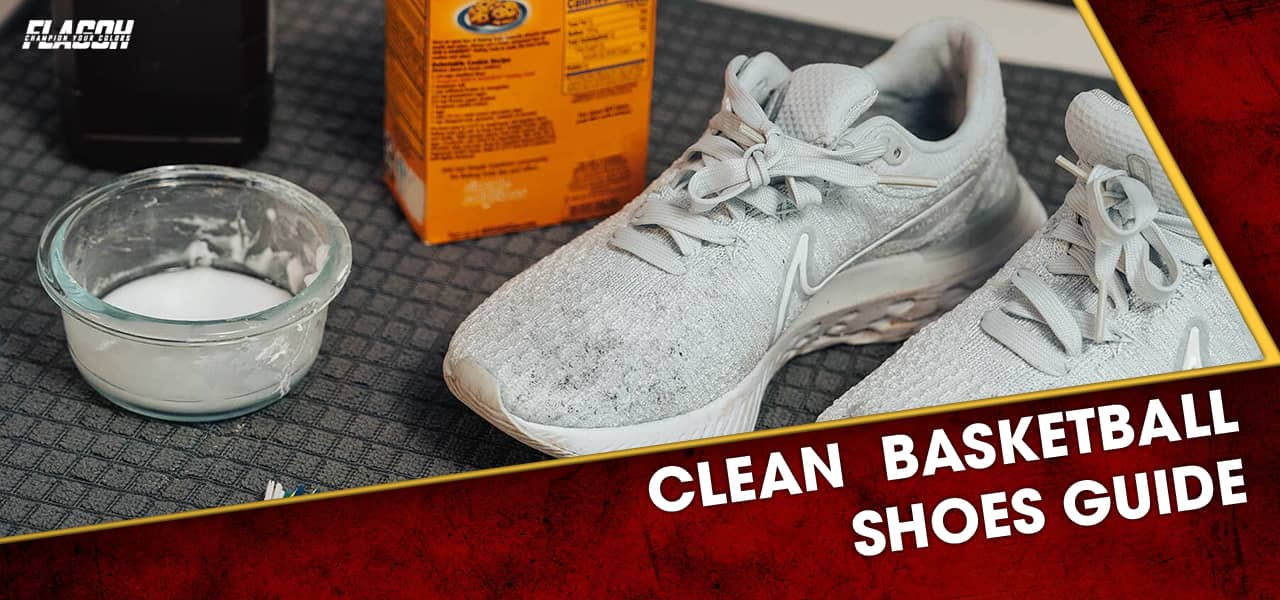
Looking for how to clean basketball shoes without killing the grip? Dust and residue—not worn rubber—steal traction. In this FlagOh Fanatics playbook, you’ll see the simple setup, safe mixes, and a fast routine that revives soles and protects every upper. The twist is what you shouldn’t do—ready to spot the silent grip-killers?
How to Clean Basketball Shoes Step by Step
This step-by-step framework shows how to clean basketball shoes safely and fast. Set up the right tools. Mix a mild solution. Then follow a simple five-step workflow that restores grip while protecting materials—no soaking, no harsh heat, no leftover residue.
Tools and Setup Guide
- Work zone: Lay a clean towel or mat on a flat surface and crack a window for airflow; keep a second dry towel nearby for final wipe-downs.
- Microfiber cloths: Two medium-weight cloths—one reserved for wet wiping, one for dry buffing—to lift dust without scratching.
- Brush kit: A soft brush for delicate uppers and a medium nylon tread brush for the outsole; add a plastic or wooden pick for dislodging packed grit; keep a melamine sponge strictly for rubber sidewalls/midsoles (not for fabric or leather).
- Bottles at the ready: One small bottle with mild soapy water, one with plain water for rinsing, and a separate bottle of rubbing alcohol reserved only for the rubber bottom; label each to prevent mix-ups.
- Shape & cleanup: Shoe trees or clean paper to help shoes keep their form while drying, plus a small trash bag for debris so you don’t track grit back onto the floor.
Safe Cleaning Ratios Guide
Use a small squeeze of pH-neutral dish soap in warm water—just enough to loosen grime without leaving heavy suds. Treat this as a gentle rinse, not a harsh strip. For a quick grip boost, make a brief pass with rubbing alcohol on the outsole only, then wipe with clean water so no haze lingers; keep alcohol away from leather or knit. If the rubber has a chalky film from outdoor courts, a well-diluted splash of white vinegar can break it down—apply only to the sole and rinse afterward. Always spot-test colored uppers; if dye lifts, stick to plain water and light pressure. Work with warm—not hot—water and let shoes dry in the shade so adhesives aren’t stressed.
Five-Step Cleaning Workflow
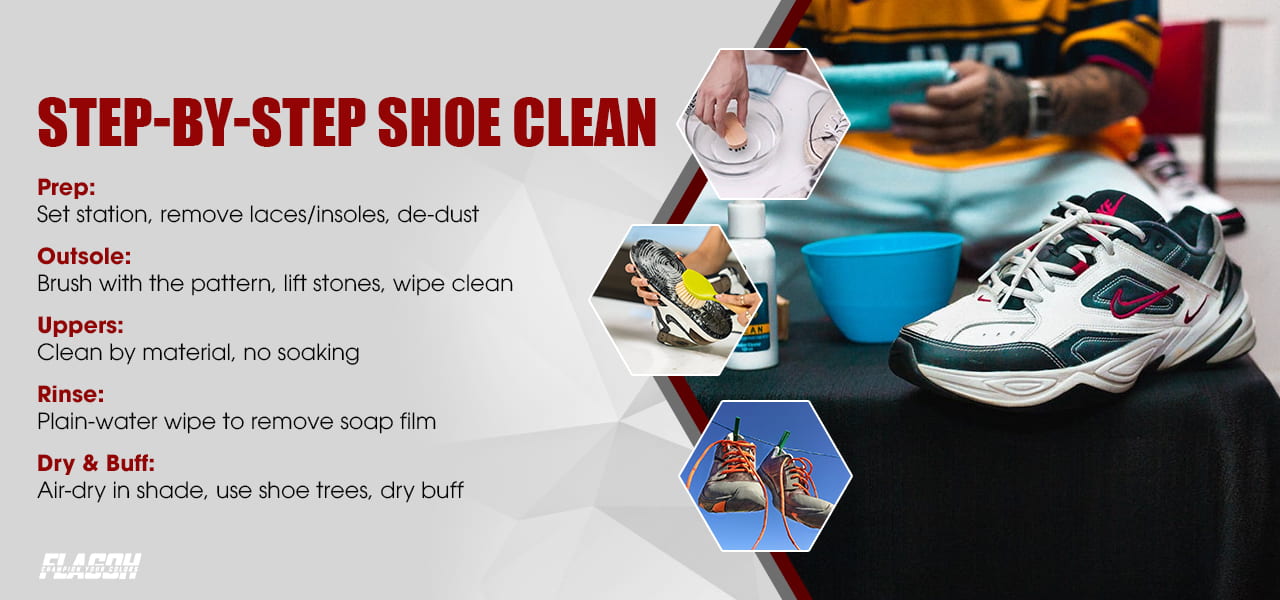
- Prepare and de-dust: Set your station, remove laces and insoles, and tap the soles together or against a mat to shake off loose debris before you ever reach for liquid.
- Clear the outsole: Using your tread brush, guide bristles along the pattern to chase dirt from the channels; coax out any trapped stones with your pick, then wipe the bottom with your prepared cleaning cloth.
- Tend the uppers: With your soft brush and damp cloth, make controlled, light passes suited to the material (knit and mesh get gentle circles and blotting; leather and synthetics get measured wipes; suede and nubuck get dry brushing only). Avoid soaking.
- Rinse away residue: Switch to your plain-water cloth and go back over every cleaned area so no cleaner remains on the surface; leftover film is a common cause of dull grip.
- Dry and finish: Insert shoe trees or loosely packed paper, set the pair to air-dry in shade with good airflow, then complete the job with a firm dry buff of the outsoles to reawaken their texture before you play.
Follow the five-step sequence—prep, outsole, uppers, rinse, dry—to clean safely end-to-end. It keeps cleaners off sensitive materials, respects spot-tests, and uses warm water and shade drying to protect adhesives and finishes. Keep everything together in a compact care kit (microfiber, nylon brush, mild soap) so repeating the routine takes no effort.
How to Clean the Bottom of Basketball Shoes
When you’re learning how to clean the bottom of basketball shoes, start at the outsole—the surface that delivers grip. A quick dust reset, a careful pass through the herringbone grooves, and a smart approach to sticky spots will clear the film that makes soles feel slick and bring back that confident stop-and-go feel without harsh chemicals or gimmicks.

Quick Dust Clean
Do a quick dust reset before tipoff: mix a little mild soap with warm water, dampen a microfiber cloth, and wipe the entire outsole to lift the chalky film. Brush along the tread with a medium nylon brush to clear the grooves after brushing, re-wipe, then dry buff with a clean towel to restore texture. That firm buff wakes the rubber’s texture so grip returns—no sticky sprays needed.
Herringbone Groove Clean
Herringbone grip comes from sharp zig-zag edges; dust packed in the channels dulls them and causes slips. Knock debris loose by clapping the soles together and gently flexing to open the grooves. Sweep with the pattern using a medium nylon brush—never across—to avoid rounding the ridges. Pop out stones, give a light, damp wipe, then dry buff to wake the rubber. If lugs still look glossy or rounded, the outsole is worn—rotate pairs or use a clean tack mat.
Gum Residue Clean
Sticky residue kills grip by coating the outsole and flattening the tread’s texture; for gum, chill it to harden and lift with a plastic card. For oily patches, start with a soapy microfiber; if residue lingers, make a quick alcohol pass on the rubber only, then wipe with clean water and finish with a dry buff. Avoid oils, silicone polishes, and harsh degreasers.
Finish the outsole reset by clearing dust, brushing with the herringbone channels, and lifting sticky film; a firm, dry buff wakes the rubber’s micro-texture so edge bite returns—no sticky sprays required. A quick courtside pass like this keeps stop-start control consistent.
Complete Care for Basketball Shoe Uppers by Material
To nail how to clean basketball shoes, match care to material—light supported damp cleaning for knit/mesh, controlled wipes for leather/synthetics, dry brushing, and spot work for suede/nubuck

Knit & Mesh Uppers
Support the panel from the inside, then use a soft brush or a microfiber-wrapped finger dipped in mild soapy water. Work gentle circles that follow the knit so debris lifts from the loops, then blot with a barely damp microfiber. Air-dry in shape and skip fabric softeners or heavy coatings.
Leather & Synthetic Uppers
Use light, controlled wipes with a well-wrung microfiber and a leather-safe cleaner. For faint matte scuffs, repeat gentle passes with a microfiber or use a white vinyl eraser. Avoid glossy prints and logos. Let it dry, then apply a tiny amount of compatible leather conditioner only if the material feels tight. Avoid oily polishes and strong solvents that attract dust or weaken adhesives.
Suede & Nubuck Uppers
Keep it dry: Brush in one direction to lift the nap, then cross-hatch lightly where marks remain. Use a suede eraser for shiny, compressed spots; for oily specks, press on a little cornstarch and brush it away later. Treat salt rings with a careful, localized dab of highly diluted vinegar, let the shoe breathe, then re-brush and finish with a light suede protector once fully dry.
Keep humidity low, let shoes air-dry, and protect each finish so the uppers stay fresher longer. A compact FlagOh Fanatics care kit in your gym bag makes the routine quick and easy.
Keep Basketball Shoes Fresh and Dry Every Day
Learning the best way to clean basketball shoes is step one; keeping them fresh and dry each day preserves grip between deep cleans—clear odors at the source, dry gently, and store breathably.

Remove Odor from Shoes
Odor comes from bacteria feeding on sweat trapped in foam and fabric. Pull the insoles out and treat them separately. Dust a light layer of baking soda inside the shoes overnight, then shake it out and hand-wash the insoles with a mild soapy solution so you remove the source, not just mask the smell. Skip perfume sprays and softeners—they leave a film that holds moisture. For stubborn cases, tuck in a small charcoal or cedar sachet between wears to keep things fresh.
Dry Your Shoes Safely
Drying protects both comfort and grip. Set the shoes in a cool, airy spot and let gentle airflow do the work; avoid direct sun and heaters, which can soften glue and deform cushioning. Stuff with clean paper or use shoe trees so the shape holds while moisture leaves evenly. Once fully dry, wipe the outsoles with a clean, damp cloth to lift any film, then give a firm dry buff to wake the rubber’s texture and restore traction.
Store Shoes for Grip
Store only when the shoes are clean and fully dry. Use a breathable bag or open shelf—not an airtight box—and keep them off oily floors and away from silicone overspray. Rotate pairs on back-to-back days so midsoles rebound and tread edges stay sharp. For longer breaks, add a small desiccant or charcoal sachet and fit shoe trees to preserve shape and control odor.
Ventilate, dry, and store smart—then give it a quick wipe down and dry polish before playing for a more consistent grip. FlagOh Fanatics’s compact tool bag makes it easy to repeat the process after every practice session.
Basketball Shoe Cleaning Common Questions
Got questions about how to clean basketball shoes? This quick FAQ covers the essentials—safe soap ratios, when alcohol is okay (outsole only), the right brush for herringbone, material-specific care (knit, leather, suede), drying without heat, and removing gum or greasy residue—so you can fix issues fast without hurting grip.

What is the safest soap-to-water ratio for cleaning?
Mix 5 mL pH-neutral dish soap with 240 mL warm water (20–30 °C). Wipe with 200–300 GSM microfiber. Skip fabric softeners; they leave a slick film.
Can I use alcohol wipes on basketball shoes?
Yes—outsole only: ≤70% IPA, light wipe, dry buff, brief air. Avoid uppers (leather/suede/knit)
What’s the fastest way to clean the bottom before a game?
Do a dust reset: spritz microfiber with the 5 mL: 240 mL mix, wipe the outsole, brush herringbone with medium nylon, re-wipe, then dry buff.
Which brush is best for grooves and herringbone?
A medium-stiff nylon brush for patterned tread; a plastic pick for stones. Avoid metal tools that nick rubber and reduce edge bite.
How do I clean knit/mesh uppers safely?
Spot-test (AATCC 61/130). Use the soap mix, light circular strokes, blot, and air-dry at 20–25 °C. Never soak or machine-wash.
How do I clean leather or synthetic leather uppers?
Wipe with a wrung cloth in the soap mix, follow stitch lines, let dry, then apply a light conditioner. Keep heat < 40 °C.
How do I clean suede or nubuck uppers?
Use a dry suede brush and eraser; for a matted nap, a short-distance steam, then brush. Avoid water and harsh solvents.
What is the safest way to dry shoes?
Air-dry at 20–25 °C with ventilation (RH 40–60%). No dryers or radiators; heat > 40 °C can cause delamination.
How do I remove gum or sticky residue from outsoles?
Harden with an ice cube, lift with a plastic card, wipe with the soap mix, then—if needed—a tiny bit of citrus remover on outsoles only, followed by a soap re-wipe and dry buff.
If your exact case isn’t listed, follow the five-step routine (prep, outsole, uppers, rinse, dry) and add a quick dust reset before you play. Keep a small microfiber-and-brush kit in a slim pouch, so cleanups stay simple and consistent. To master how to clean basketball shoes: clear outsole dust, brush with the herringbone, remove sticky film, then dry-buff for bite. Use a mild soap rinse, treat uppers by material (knit/mesh gentle, leather/synthetics controlled wipes, suede/nubuck dry brush), rinse residue, air-dry in shape, and store breathably. A compact care kit keeps it quick—FlagOh Fanatics keeps you organized and court-ready.