
Sometimes a new jersey arrives and fits like a tent, not like your game-day MVP. This guide shows you how to shrink a jersey safely at home—so it’s smaller, neater, and still protects the numbers and logos—based on what actually happens to different fabrics and print types in real washes and dryer cycles. And if you’d rather start with the right fit from the beginning, you can always look at fan-ready designs from FlagOh Fanatics instead of fighting with your washer and dryer.
Step-By-Step Guide On How To Shrink A Jersey
Learning how to shrink a jersey is much easier when you break it into clear, repeatable steps instead of guessing with random washer and dryer settings. This three-step guide helps you start gently, only move up to stronger heat when it makes sense, and protect your prints the whole way through.

Step 1: Start With A Gentle Shrink
Start with the least aggressive option, especially if the jersey is only a bit too loose or made with polyester or a poly-heavy blend. Wash the jersey on the warmest setting the care label allows, ideally on its own or with one or two light items so the heat reaches it evenly.
Move it straight into the dryer on medium heat for a short cycle of about 10–15 minutes, then take it out while it’s still slightly warm, smooth it flat, and try it on immediately. If you need a little more shrink, repeat another short dry instead of one long, aggressive cycle, so you keep the fit changes predictable and easy to control.
Step 2: Use Stronger Heat For Cotton
If the gentle approach hasn’t done enough and your jersey is cotton or cotton-rich, you can step up the intensity. Turn the jersey inside out, then wash it at the higher end of the temperature range shown on the care label so the fibers relax.
Dry it on medium–high heat for around 15–20 minutes and check the fit while the fabric is still warm. If you’re close to your target size, finish drying on low heat or air-dry so it doesn’t keep tightening. Because cotton and blends rarely shrink perfectly evenly, take a moment to gently reshape the hem and shoulders with your hands before the jersey cools completely.
Step 3: Protect Jersey Prints
At every stage, treat the prints as more fragile than the fabric itself. Turn the jersey inside out, keep it away from zippers and rough items, use a mild spin rather than a heavy one, and lay it flat to cool instead of folding or hanging it by a single point. If you notice any edge of a number or logo starting to lift, stop using heat-based methods and focus on preserving the graphic rather than chasing a tighter fit.
Shrinking your jersey in small, controlled steps keeps the fabric and graphics in good shape—so it stays game-ready, whether it’s an old favorite or a fresh pickup from FlagOh Fanatics.
Fabric and Fit Basics Before You Shrink a Jersey
Before you decide how to shrink a jersey, you need to know what it’s made from. Polyester, cotton, and blends all react to heat differently, and the care label indicates the extent to which you can safely use heat before risking excessive shrinkage or damage to the graphics.
Check The Jersey Fabric First
Different jersey fabrics shrink in very different ways. Most modern sports jerseys fall into three common groups for how much they can actually change:
- 100% polyester – typical for NFL, basketball, soccer, and hockey replicas
- Cotton or cotton-rich jerseys – common in lifestyle or “fashion fan” pieces
- Poly/cotton blends – a mix of performance and comfort, sitting between the two
Each group has its own “shrink personality”:
- Polyester jerseys: Built from smooth synthetic fibers that are engineered to keep their shape. They resist shrinking, so any change you get will be subtle—more like a mild tightening than a full-size drop.
- Cotton jerseys: Made from natural fibers that compress easily under heat and moisture. These are the jerseys that can noticeably pull in and feel smaller all over, especially after a hot wash and a strong dry cycle.
- Poly/cotton blend jerseys: Combine polyester’s stability with cotton’s tendency to shrink. They usually respond to heat more than pure polyester but less dramatically than pure cotton. A 60/40 cotton/poly jersey, for example, may trim down enough to feel more fitted without collapsing to a much smaller size.
How Jersey Fabrics Handle Heat
| Fabric / Print Type | Typical Shrink Potential | Suggested Wash Temp Range | Suggested Dryer Setting | Risk to Numbers/Logos |
| 100% polyester jersey | Low (≈1–3%) | 30–40°C / 86–104°F | Medium heat, short cycles | Moderate for vinyl prints, low for sublimation |
| Polyester-rich blend (poly > 50%) | Low–medium (≈2–5%) | 30–40°C / 86–104°F | Medium–high, short cycles | Moderate–high for vinyl and screen print |
| Cotton-rich blend (cotton > 50%) | Medium–high (≈5–7%) | 40–60°C / 104–140°F | Medium–high, longer cycles | High if overheated |
| 100% cotton jersey | High (up to 1 full size) | 40–60°C / 104–140°F | High heat, longer cycles | High if graphics are vinyl or screen print |
| Sublimated graphics (dyed into fabric) | Fabric only | Follows the base fabric | Follows the base fabric | Very low |
| Heat-pressed vinyl/screen print | N/A | As low as possible | As low as possible | High risk of peeling |
If you don’t want to gamble with trial and error, choose jerseys with clear fabric details, sizing, and care guidance—like the fan-ready designs from FlagOh Fanatics—so you spend more time wearing your gear and less time fighting the laundry.
Common Mistakes When Shrinking A Jersey
When you look up how to shrink a jersey, it’s tempting to hunt for a quick fix—but a few common mistakes can warp the fabric or wreck the prints, so it pays to know what to avoid first.
Expecting A Full-Size Drop Every Time
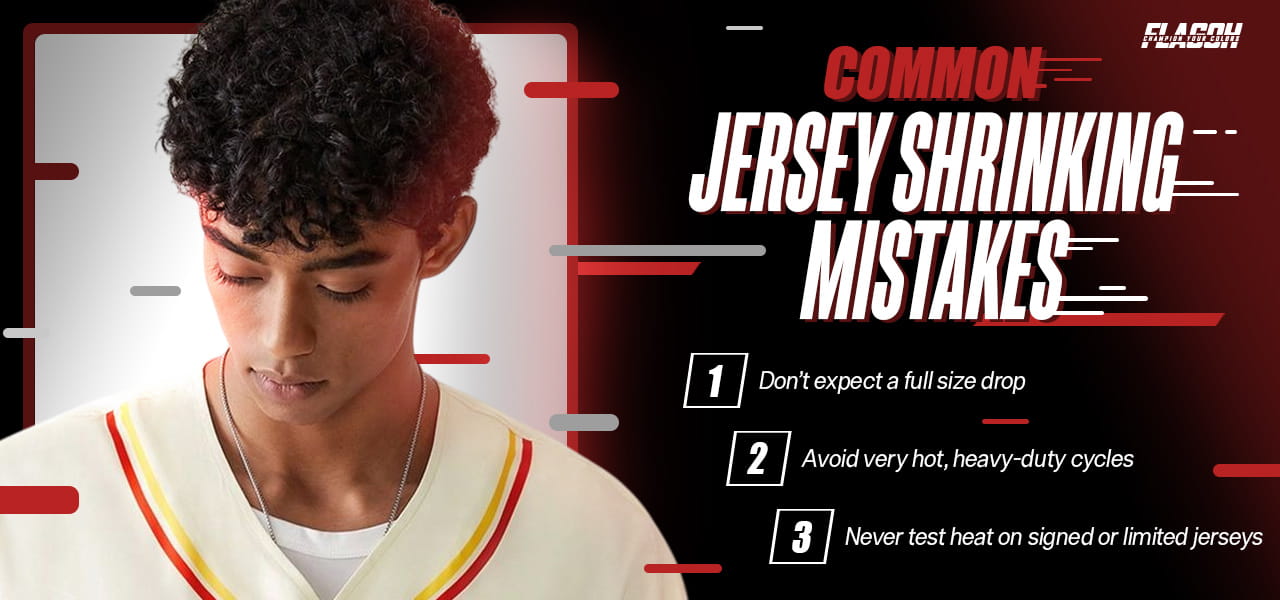
One of the biggest frustrations comes from expecting a huge change from a single wash-and-dry cycle. Most jerseys, especially modern performance styles, only tighten slightly even under warmer settings. Treat shrinking as a small adjustment tool, not a magic way to turn an XXL into a medium, and you’ll avoid chasing unrealistic results that end up stressing the fabric and seams.
Using Harsh Laundry Settings As A Shortcut
Another common mistake is using the “nuclear option” in the laundry room—very hot water, heavy-duty cycles, long, hot drying times—just to speed things up. Those settings are designed for towels or workwear, not decorated sports tops, and they tend to rough up the surface, twist the shape, and age the fabric quickly. Gentler programs with shorter run times give you far more control over both fit and appearance.
Experimenting With Jerseys You Can’t Replace
It’s also easy to forget that not all jerseys in your closet belong in the test group. Signed pieces, limited releases, and sentimental jerseys from big games are poor candidates for heat-based experiments, because any distortion or print damage can’t be undone. A smarter approach is to practice on a cheaper or newer jersey first, learn how it responds, and only apply similar tweaks to more important pieces if you’re confident in the outcome.
By keeping expectations realistic, skipping harsh laundry settings, and never experimenting on jerseys you can’t replace, you turn shrinking from a risky gamble into a small, controlled adjustment.
Aftercare, Damage Control, and When To Replace
When you’ve finally dialed in the fit, the goal isn’t to keep shrinking—it’s to make that fit last. From this point on, how you wash, dry, and rescue the jersey after little mistakes will decide whether it stays game-ready or slowly gets tighter, shorter, and harder to wear.

How To Wash a Jersey After You’ve Shrunk It
Once you’ve got the fit you want, treat every wash as maintenance, not another shrink attempt. Stick to cool water, short, gentle cycles, and mild detergent, then air-dry or use low tumble so the jersey keeps its new shape and the prints stay flexible instead of turning stiff or cracked.
What If You Shrink Too Much? Unshrink and Rescue Options
If you’ve gone too far and the jersey feels tight, you can sometimes ease it a little by soaking it in warm water, stretching the key areas while it dries, and then wearing it over a thin base layer.
If that barely moves the fit, it’s better to reframe how you use it—wear it open over a tee, hand it down, or turn it into wall or display art—than to keep punishing the fabric.
When To Replace or Upgrade to Better-Fitting Jerseys
When a jersey is still way off in size, the graphics are badly damaged, or the hem stays too short even after careful washing and stretching, it’s usually ready for retirement and an upgrade.
Choosing fan gear with clear size charts, honest fit notes, and simple care instructions makes it much more likely your next jersey fits right straight out of the package—no shrinking experiments needed.
Important Questions About Shrinking Jerseys
Got questions that don’t fit neatly into the step-by-step guide? This quick mini-FAQ covers the most common things people worry about with how to shrink a jersey—from polyester that barely moves to youth sizes you don’t want to make too short.
Can you actually shrink a polyester jersey?
Yes, but only slightly. Most polyester jerseys only tighten a little in the dryer, so you can clean up the fit but not drop a full size.
What is the safest way to shrink a football jersey at home?
Wash it warm (around 30–40°C / 86–104°F), then dry on medium heat in 10–15 minute cycles, checking the fit each time to avoid over-shrinking or damaging prints.
Will shrinking a jersey damage the numbers and logos?
It can, especially with heat-pressed vinyl or thick screen prints. Turn the jersey inside out, avoid very high heat, and use short dryer cycles to reduce the risk.
Is it better to shrink a jersey in the washer or the dryer?
The dryer does most of the shrinking; the washer mainly prepares the fibers. For control, use warm water plus short, medium-heat dryer intervals.
How hot should the water be to shrink a jersey?
For most jerseys, 30–40°C (86–104°F) is a safe start. Cotton can sometimes handle up to 60°C (140°F), but polyester should stay at the lower end.
How much can a jersey shrink in one wash cycle?
A polyester jersey might only shrink 1–2% in a single cycle. Cotton or cotton-rich jerseys can shrink 5–7% or about one size if washed hot and dried on high heat.
Can you shrink a youth jersey without making it too short?
Yes, but very carefully. Use warm wash, low-to-medium dryer heat, and very short cycles, checking the hem each time and stopping as soon as it fits.
What’s the difference between shrinking a cotton jersey and a polyester jersey?
Cotton reacts strongly to heat and can shrink a lot; polyester is designed to resist shrinkage, so even repeated warm washes and drying only make small changes.
Understanding how fabrics react to heat and how much jerseys can really shrink means you don’t have to stress over every wash—most of the time, clear sizing and simple care are enough to keep them in shape without constant shrinking experiments. Any method that relies on extra heat or longer dryer cycles should be used carefully and at your own discretion, because every jersey, print, and washing machine behaves a little differently. This guide gives you a clear framework for how to shrink a jersey without wrecking the fabric or the graphics, so you can decide when to tweak, when to leave it, and when to move on. And if you’d rather start with a jersey that already fits the way you like, fan-ready designs from FlagOh Fanatics make it easier to skip the shrinking experiments altogether.