
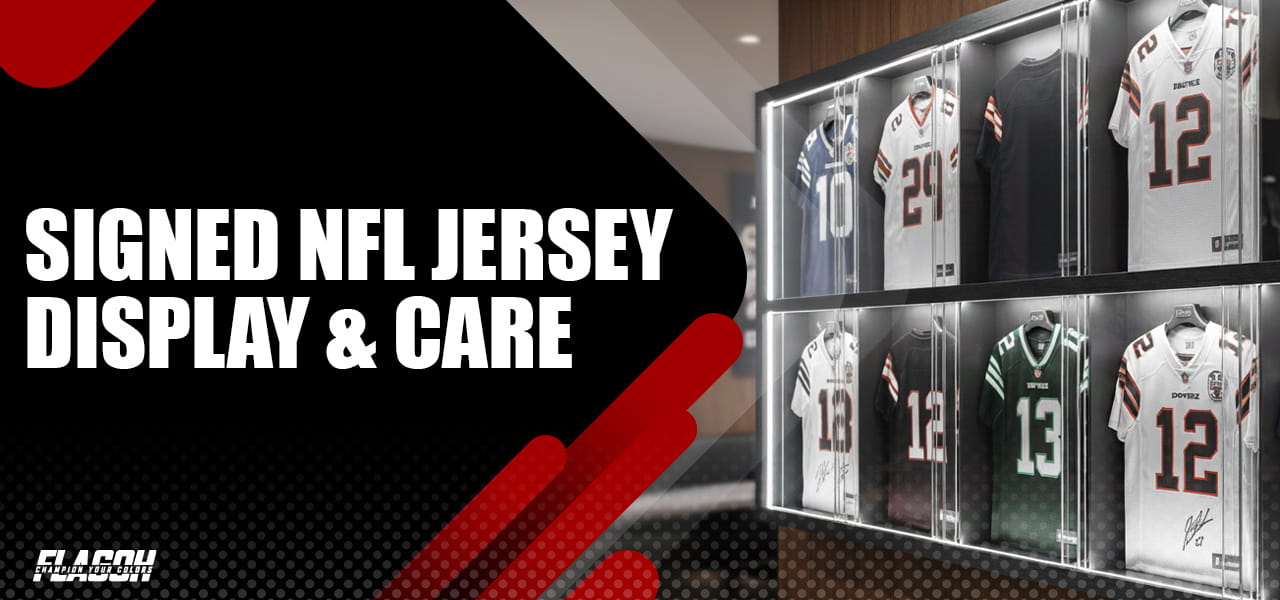
Signed NFL jerseys sit in a strange space between sports gear and heirloom: one good autograph can turn a basic top into something you protect for years. After more than a decade around custom football gear and memorabilia, I’ve seen how often fans overpay, end up with a smudge, or damage the ink on the way home. In this FlagOh Fanatics guide, you’ll learn how to prepare better, handle in-person signings with less stress, and keep each signature looking sharp long after game day.
Signed NFL Jerseys Concepts And Essentials
Before you worry about prices or framing, it helps to get clear on the basics of what people actually mean when they talk about signed NFL jerseys—what qualifies as a true autograph piece, which types you’ll see most often, and why the moment of the signature matters just as much as the fabric underneath it.
What Counts as a Signed NFL Jersey?
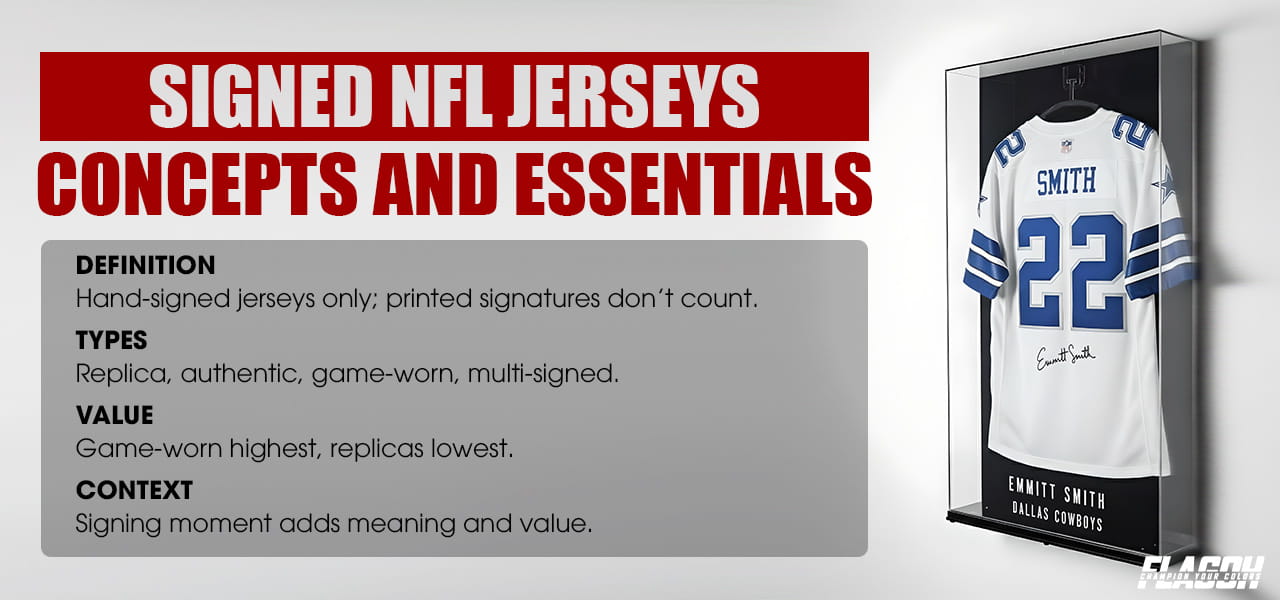
A jersey counts as an autograph piece when it’s hand-signed by an NFL player or coach directly on the fabric with a marker or paint pen. That can be a fan jersey, an authentic on-field version, or even game-used gear, as long as the writing is genuinely theirs.
Items with printed or machine-repeated signatures, or game uniforms that were never actually signed, don’t fall into this category. Limited runs from controlled signing events can still be collectible, provided the ink is truly hand-applied, and there’s a clear way to verify who signed it and when.
Common Types Of Autographed Jerseys
When you start browsing, you’ll run into the same core types again and again:
- Fan or replica signed jersey: A standard retail jersey with printed numbers and lighter fabric. It’s usually the most affordable option to get signed and works perfectly if you mainly want something personal for your wall.
- Authentic or pro-cut signed jersey: An authentic or pro-cut jersey is closer to what players wear on the field, with heavier fabric, stitched twill numbers, the correct font, and proper tags. It costs more upfront but tends to look sharper in frames and often ages better over time.
- Game-worn or game-issued signed jersey: A game-worn or game-issued jersey has either been used in a real game or prepared for one. These pieces usually show visible wear, such as turf marks, stretched fabric, and scuffed numbers, and when they are signed and properly documented, they tend to sit at the top of the value ladder.
- Team-signed or multi-signed jersey: A team-signed or multi-signed jersey carries many signatures on one piece, for example, a full offensive line or a Super Bowl roster. It can look incredible on a wall, but is harder to read from a distance and more challenging to authenticate player by player.
Understanding which type you’re dealing with helps set realistic expectations for both price and how carefully you should handle it.
When And Where Jerseys Get Signed
Over a full season, you can almost see a rhythm to when jerseys get signed. Early in camp and preseason, players usually have more time and energy, so pieces from that window often come with fuller names or neat inscriptions.
As the schedule tightens, most signatures are squeezed in around travel days or big matchups, which is why gear tied to playoff pushes, record games, or international trips (London, Germany, Mexico) often feels special even if the ink looks the same. If you note the stage of the season and the occasion when the autograph happened, you’re not just tracking a date – you’re anchoring the jersey to a specific chapter in that team’s story.
From there, it’s simple to build out full walls or themed clusters that match the kind of fan-first display mindset you see in FlagOh Fanatics designs and how they all fit into the story you’re building on your wall or in your collection, instead of feeling like a random pile of shirts.
What Makes Autographed Jerseys Worth More
When two framed jerseys hang side by side, they might look similar, but collectors judge them by who signed them, the moment in that person’s career, the proof behind the story, and how the piece is presented long before they ever look at the price tag.
Player Story and Career Moment
Value starts with who signed the jersey and where they were in their career. An autograph from a franchise cornerstone, Hall of Famer, or era-defining quarterback will always be read differently from a role player who only logged a few seasons. When a piece can be tied to a clear chapter – a breakout year, Pro Bowl season, playoff run, record game, or signature era with a big-market team – it stops feeling generic and starts reading like a small slice of NFL history.
Proof, Presentation, and Scarcity
The next layer is evidence and how the piece is presented. A clean signature backed by a trusted authenticator, a verifiable serial number, or a photo from the signing has a built-in advantage over an item that relies on “word of mouth. The way you frame and label the jersey – a small plaque with name, year, or event – also shapes how serious it looks to buyers. Details like “SB MVP” or “HOF 2025” inscriptions, genuine limited numbering, or event-specific patches add a sense of scarcity, and the market usually pays a bit more when that rarity is documented instead of just claimed. A reputable certificate of authenticity (COA) with a trackable serial number and contact details is a much stronger signal than a generic card that just says “authentic” with no way to verify it.
Realistic Price Ranges and a Healthy Mindset
Most authenticated pieces from everyday names typically sell for under $100. Recognized stars and fan favorites can climb into the mid-hundreds or higher, while true legends with strong proof and memorable moments behind them usually sit in a higher tier again.
Treat online asking prices as rough wishes, not guarantees, and use completed sales on established sports memorabilia platforms to see what similar jerseys have actually sold for. Above all, collect for meaning first and resale second, so you’re happy to own the jersey even if it never goes to auction.
None of this is investment advice, and even the most attractive pieces can move up or down in price for reasons nobody can fully predict.
If you keep these layers in mind, it’s easier to see which pieces deserve a spot in your collection and which work best as simple keepsakes. With time, you’ll recognize the same patterns pricing guides use, and you can lean on that logic—plus fan resources like our store—to build a wall-worthy, budget-friendly setup.
Smarter In-Person Signings For Signed NFL Jerseys
When people think about signed NFL jerseys, they usually picture the autograph itself, but the few seconds around that moment matter just as much. How you prepare the fabric, choose the pen, and handle the jersey before and after the signing goes a long way toward deciding whether the result looks clean on a wall or tired after one season.
Making The Most Of In-Person Signings
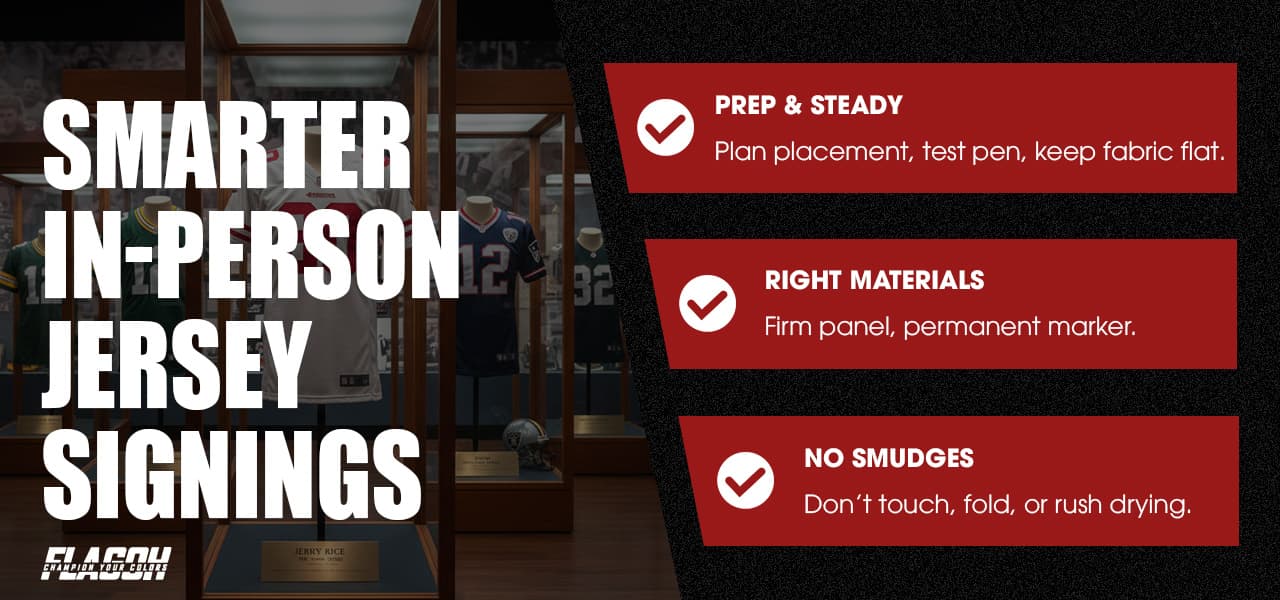
You only get a few seconds in front of a player, so the more of that time you spend signing, not fumbling, the better. Before you leave home, decide exactly where you want the autograph, fold the jersey so that the panel lies flat, and test the pen so it’s flowing smoothly.
When you’re near the front, hold the signing area tight with both hands and keep the cap off the marker so the player can write in one motion. Once the ink is down, keep that part of the fabric still and flat for a short moment before you move, fold, or pack it away, so you don’t create smudges in the first few seconds. I’ve watched more than one great autograph get ruined simply because someone folded the jersey the moment they stepped away from the rail.
Materials That Make Signatures Last
A strong autograph starts with the right surface and ink. Pick a firm panel with minimal stretch—stitched numbers or solid fabric that doesn’t warp when you tug it lightly—so the lines stay clean instead of breaking across mesh holes. Pair that with permanent, fade-resistant markers made for textiles or display (often labelled lightfast or archival), choosing dark ink on light areas and metallic or light tones on dark backgrounds. That combination gives the signature a better chance of staying clear through years of light and temperature changes. Most modern NFL tops use polyester mesh, so pairing that fabric with stitched tackle-twill numbers and a stable, low-stretch panel gives the autograph the best base to sit on.
Habits That Ruin Great Autographs
Most damage comes from what happens in the minutes and days around the signing. Smudges usually come from touching or folding the ink before it’s dry; jagged lines come from letting the jersey sag over a rail instead of holding the fabric tight. Asking players to sign on tiny logos or thin stripes forces cramped initials, while turning up with damp or dirty fabric makes it harder for ink to bond cleanly. After the event, avoid stuffing the jersey into bags or onto damp seats—until it’s framed or stored properly, treat it with the same care you’d give a printed photo.
With a bit of planning—good placement, stable fabric, the right ink, and careful handling—you turn a quick signature into something that actually lasts. Approach each piece with that mindset, and you’ll build a collection that’s easier to display, easier to protect, and easier to match with whatever flags, photos, or extra pieces you decide to add later.
How To Display, And Protect Your Jerseys At Home
Once a jersey has an autograph on it, especially signed NFL jerseys, you plan to keep it on display, and the wall becomes part of its lifespan. The height you choose, the light it sits under, and how firmly it’s mounted all quietly decide how sharp or tired it will look a few years from now.
Best Ways to Display Jerseys on a Wall
Treat the jersey like artwork, not storage. Hang the center of the frame or shadow box roughly at eye level, so it reads naturally in the room, and avoid spots with direct window glare. If you’re grouping several pieces, keep one consistent center line and arrange them so they tell a clear story (by team, era, or colour), instead of scattering frames at random heights.
Framing Materials, UV Protection, and Mounting Tips
A good jersey frame or shadow box creates a safer “mini-environment”. Use glazing with strong UV blocking and a backing board made for display, not bare cardboard. Inside, leave a little space between the fabric and the front panel so the cloth isn’t pressed flat against the glazing. On the wall, hang with proper anchors or a two-point system so the frame doesn’t slowly tilt or pull the jersey out of position.
Storing Jerseys You’re Not Displaying
For pieces off the wall, think flat and stable. Store them in a low, wide box rather than on thin hangers, using soft layers between folds so numbers and nameplates don’t rub against each other. Keep them out of hot lofts or damp basements, and label each box by player and team so you can rotate what’s on display without digging through the entire collection.
Once those basics are set, you don’t have to rethink them every time you add something new. Fresh frames can drop into the same line on the wall, older pieces stay put instead of drifting or fading unevenly, and the whole room starts to feel more like a small gallery than a pile of gear – the kind of clean, fan-first display you’d expect from FlagOh Fanatics.
Need-to-Know Answers on Signed NFL Jerseys for Fans
If you’re new to collecting or just want to sanity-check what you already own, the questions below cover the essentials—authenticity, value, care, and how to handle in-person signings—without drowning you in jargon.
What makes a signed NFL jersey authentic?
An authentic piece is a real NFL jersey hand-signed by the player, backed by credible proof such as a recognizable authenticator, matching hologram/serial number, and details that fit the correct team era.
How can you tell if an autographed jersey is fake?
Compare the autograph to known examples, check that tags/fonts/colors match the period, and verify any hologram or serial number with the authenticator; generic COAs with no way to check are a red flag. If a seller refuses to share clear, close-up photos of the signature, tags, and COA, or pressures you to decide immediately, it’s usually safer to walk away.
Do autographed jerseys keep their value over time?
They can, especially for stars, Hall of Famers, and big moments that are well documented, but nothing is guaranteed, so it’s safer to buy pieces you’d be happy to keep even if prices drop.
Is it better to buy a game-worn or a regular signed NFL jersey?
Game-used items are rarer and more expensive, good for serious collecting, while a regular or authentic jersey with a clean autograph is usually better if you mainly want something affordable to frame and enjoy.
Can you wash a signed NFL jersey, or will the autograph fade?
Washing always carries some risk to the signature, so spot clean around the ink when possible; if you must wash, use cold water, gentle detergent, avoid the signed area, and let it air-dry flat.
Where is the best place to get an NFL jersey signed in person?
Organized signings like training camp sessions, fan days, and store or convention events are usually best because players expect to sign, and you have time to set up the jersey and pen properly.
What is the best pen to use for signing NFL jerseys?
Use a permanent marker or paint pen made for long-lasting use—light or metallic paint pens on dark numbers, fine black or blue marker on light numbers—and always test it on scrap material before handing it over.
Use these answers as a quick reference whenever you’re buying, cleaning, or framing a piece, and pair them with the checklists in this guide. Over time, they’ll help you spot better opportunities, avoid simple mistakes, and build a collection you’re genuinely proud to hang on your wall.
Seen as small pieces of football history, signed NFL jerseys make a lot more sense than if you treat them as just another layer in your wardrobe. Once you understand the main types, what really drives value, and the basics of caring for ink and fabric, it becomes much easier to choose pieces you’ll still be glad to see on your wall ten years from now. From there, you can use fan-first ideas from FlagOh Fanatics as a starting point for building your own mix of jerseys, flags, and displays so the whole setup feels intentional, not accidental.