
What is a jersey, really? Ask ten people, and you’ll hear ten different answers—a shirt, a kit, a sweater, or just “the thing with the number.” This guide untangles that confusion. We’ll break down what actually turns a regular shirt into a true game top, the main types you’ll see (authentic, replica, swingman, game-worn), the fabrics different sports rely on, and how it should fit in everyday life. At FlagOh Fanatics, we spend our days around fans, flags, and team gear, so everything here is plain language and practical advice, not shopping hype.
What is a Jersey in Modern Sports Today for Fans?
In modern sports, when people ask, “What is a jersey?” the answer usually comes down to one thing: the game shirt that displays your team’s colors and your player identity, designed to comply with league rules on design, fabric, and markings. In leagues like the NFL, NBA, and top European football competitions, that usually means clear numbers for TV cameras, specific color rules for home and away kits, and materials that can handle a full match without falling apart.
How a Shirt Becomes a Jersey
If you start from a plain T-shirt, a few elements have to change before it makes sense to call it a jersey:
- Clear team identity: A jersey carries specific team colors and usually a logo, crest, or school/club mark. The colors are not random—they follow a club, national team, or school design.
- Player identity, not just branding: Jerseys almost always have a number on the back, and often a name above it. The number identifies one player on the field so referees, commentators, and fans can tell who did what.
- Game-ready construction: Most modern jerseys use breathable knit fabrics such as polyester or performance blends. They are cut to allow movement, handle sweat, and survive frequent washing. A casual cotton shirt doesn’t need to do all that.
- League or competition rules: Many leagues specify where numbers must sit, the minimum number height, and which colors are allowed for home, away, or alternate kits. A jersey has to fit inside those rules; a normal shirt does not.
Jersey vs Shirt, Kit, and Uniform
Here’s a quick comparison to show how a jersey differs from a regular shirt, a soccer kit, and a wider uniform:
| Item | Main Purpose | Team Identity | Player Identity | Typical Fabric & Construction | Rules | Where You See It |
| Jersey | Sports top for games and fan wear | Strong: team colors, logo/crest | Yes: usually a number, often a name | Lightweight, breathable knit (often polyester or performance blends) | Often follows league rules on color, number size, and layout | On the field, in arenas, among fans at games and watch parties |
| Regular Shirt | Everyday clothing or simple branded apparel | Optional: may show a logo or graphic | Rare: usually no official number/name | Wide range: cotton, blends, heavier fabrics; not always sports-ready | No sports rules, just general dress codes | Daily wear, casual settings, and workplaces |
| Kit | Complete outfit for a team in a match | Very strong: coordinated across pieces | Numbers on jersey, sometimes on shorts | Jersey top plus sport-specific shorts and socks | Must comply with competition rules and color clashes | Professional and amateur soccer/football matches |
| Uniform | Represent a team, school, or workplace as a full outfit | Strong: design and colors match overall | Sometimes: name badge or role, rarely numbers | Depends on context: woven shirts, workwear, or sports knits | Follows organization or dress code guidelines | Schools, workplaces, the armed forces, and some sports teams |
By the end of this section, the differences between a simple shirt, a full kit, a uniform, and a true game top become much easier to spot. That clarity makes it simpler to choose what you wear on match days—and to dive deeper into gear and game-day setup ideas from FlagOh Fanatics without feeling lost in the terminology.
Types of Jerseys for Fans, Players, Collectors Alike
Once you’ve answered “what is a jersey” at a basic level, the next big question is usually about the labels on the tag: authentic, replica, swingman, fan, or game-worn.
Authentic vs Replica Sports Jerseys
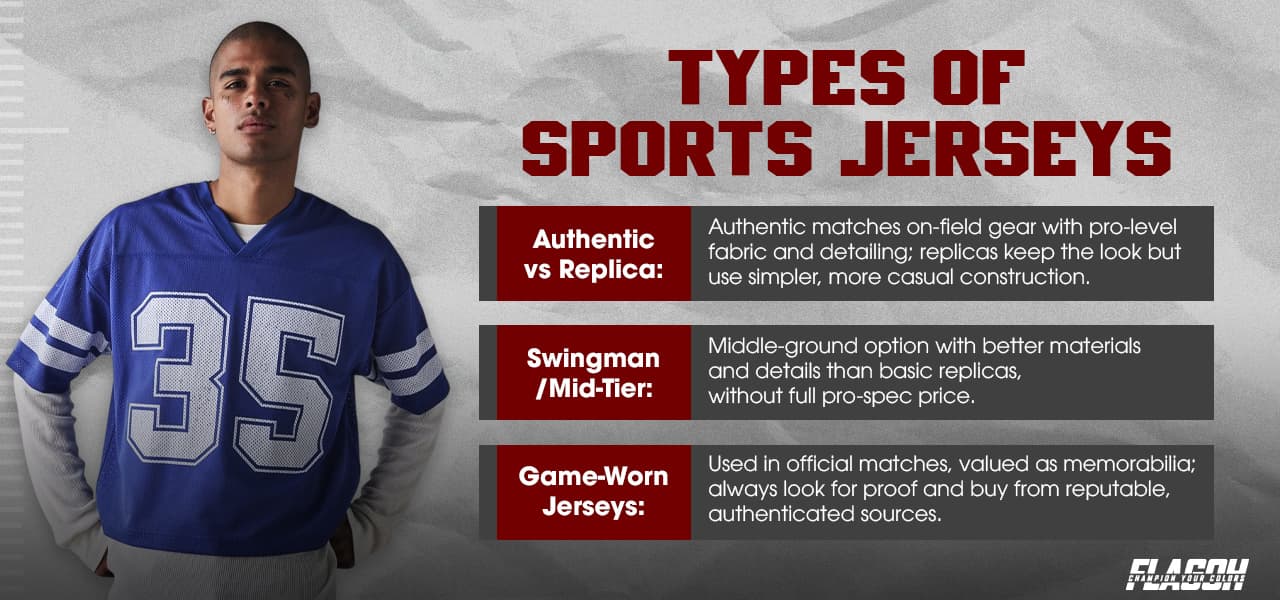
In most major sports, fan tops fall into two main categories: Authentic and replica. Authentic versions are patterned and finished to mirror the gear used in real games, with more complex paneling, accurate fonts, stitched or high-grade heat applications, and performance polyester designed to manage heat and sweat for 90+ minutes of play. Replicas keep the overall look—colors, crest, sponsor, and number layout—but use simpler construction, slightly looser cuts, and more basic print methods so they’re cheaper and more comfortable for everyday wear. In short, authentics are about on-field accuracy and performance feel, while replicas focus on visual match and casual comfort at a lower price point. If official licensing matters to you, check for league and manufacturer logos, holograms, or tags that indicate the jersey is an approved product, not an unlicensed copy.
Swingman and Other Mid-Tier Jerseys
A swingman jersey is the middle ground for many basketball fans. It keeps the key details that make a design recognizable—proper team colors, clean fonts, decent name and number applications—without every small element of pro tailoring.
Fabrics are usually lighter and better ventilated than entry-level replicas, but trims and paneling are simpler than top-tier pieces. Other sports sometimes call this tier “premium fan” or “stadium” jerseys, but the idea is the same: You get better materials and finish than a budget top, without paying for full professional spec.
Game-Worn Jerseys for Collectors
A game-worn piece is less clothing and more memorabilia. It has been used in an official match, often carrying marks of action like grass stains, puck scuffs, or pulled threads, and is tied to a specific player, team, and date. Serious collectors look for proof—certificates, equipment room records, and photo or video matches—to confirm that history. If you’re buying at this level, it’s wise to use reputable sellers and independent authentication services to avoid forgeries.
Because value depends on preserving those signs of use, people rarely wash or wear these again; instead, they’re framed, stored away from sunlight, and treated like a signed print or limited-edition artwork.
Put simply, each version is built for a different job—playing, everyday wear, or collecting—so knowing which one you’re buying matters. Understanding that balance of detail, comfort, and value makes your choices much easier—and helps you read any future gear guides or display tips from our store with a lot more confidence.
What Different Types of Jersey Fabric Are There
Behind every design, there’s a fabric doing the hard work—staying flexible when you move and keeping prints, crests, and numbers sitting flat. From soft lifestyle tops to match-ready game shirts, the biggest differences come from how the material is knitted and which fibers are used, not just the colors on the surface.
Jersey Knit Fabric vs Woven Fabric
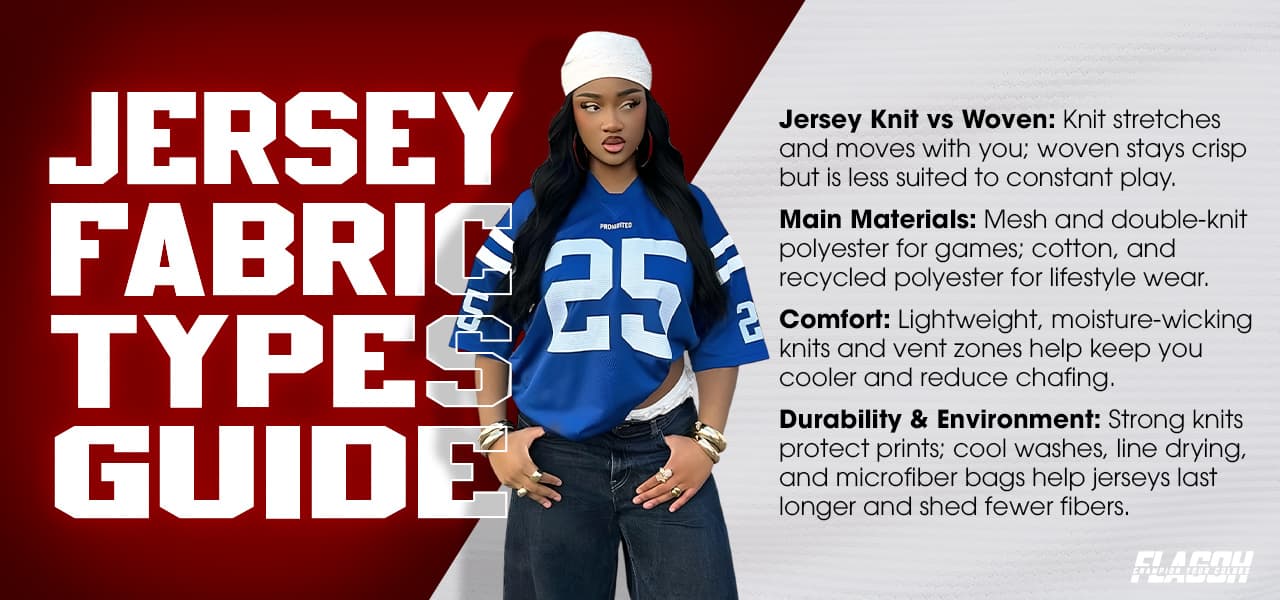
Most game tops use jersey knit, not shirt-style woven cloth. Knit fabric is constructed from interlocking loops, allowing it to naturally stretch and drape with the body. That makes it comfortable when you sprint, twist, or reach overhead. In sports pieces, the knit is usually light to mid-weight, airy enough for heat to escape but dense enough to keep prints sharp.
Woven fabric, as you see in dress shirts or many uniforms, is made from yarns crossing over and under each other at right angles. It feels crisper, holds shape well, and usually doesn’t stretch unless elastane is added. That structure is great for tailored garments, but less ideal for constant, multi-directional movement on the field.
Modern Jersey Materials in Different Sports
Within that knit construction, teams and brands choose from a few main material families:
- Mesh-based polyester for training tops and highly ventilated match pieces, especially in basketball and soccer.
- Double-knit polyester for heavier-contact sports like baseball and American football, where shape retention and abrasion resistance matter.
- Recycled polyester is used in many newer designs, aiming to cut the use of virgin plastic while keeping similar dry-time and durability.
- Cotton and cotton blends for lifestyle tops that borrow team designs but are meant for the stands or street, not a full match.
- Hybrid blends (poly–cotton, poly–elastane) are used when designers want quicker drying than pure cotton with a bit of extra stretch and softness.
Why Fabric Choice Matters for Comfort, Durability, and the Environment
Comfort and performance:
Lighter, moisture-moving knits help sweat evaporate instead of soaking the fabric, which reduces chafing and overheating. Well-placed vent zones can make a noticeable difference late in a game or during hot-weather training.
Durability and print life:
Stronger yarns and stable knits support seams, crests, and number applications through many wash cycles. When the base fabric is flimsy, prints tend to crack, peel, or warp much sooner, even with careful care.
Environmental impact:
Most performance pieces are synthetic, which rely on fossil fuels and shed tiny fibers in the wash. Recycled options lower the demand for new raw material but behave similarly in water. Simple habits—cool washes, line drying, turning the jersey inside out, and using a microfiber-catching bag—can help cut energy use and fiber release while keeping the garment in play for more seasons.
Understanding the different fabrics makes it easier to pick a cooler top for hot days, a tougher one for contact, or a softer one for everyday wear. And if you want to go further—pairing jerseys with flags, setting up a game-day room, or keeping your gear in good shape over multiple seasons—specialist guides from FlagOh Fanatics are a natural next step.
How Jerseys Should Fit for Everyday Wear
Beyond the design and fabric, what a jersey is also comes down to how it feels on your body and how naturally it fits into your day. This section gives you simple checkpoints for fit and easy style tips so you stay comfortable in motion and look in place, whether you’re in the stands, at a bar, or just running errands.
What Is a Jersey Supposed to Fit Like on Your Body?
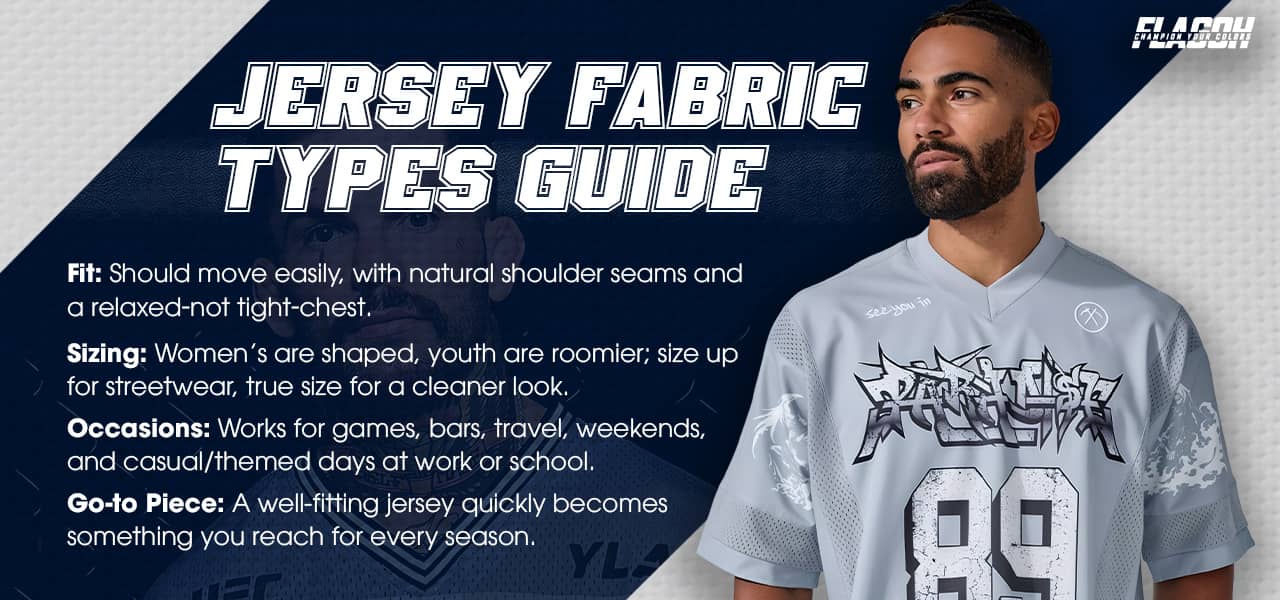
A good fit should feel easy to move in, not painted on or flapping. Shoulder seams sit near the edge of your shoulders, and around the chest, you want about 2–3 inches (5–8 cm) of ease so you can breathe and lift your arms without stretching logos or numbers. Game cuts are often a bit longer to tuck in, while for casual wear, a hem around mid-hip works well. Women’s versions are usually narrower and slightly shaped, youth cuts are shorter and roomier, and for streetwear, you can size up for a relaxed look or stay true to size for a cleaner line—as long as it moves with you comfortably.
Wearing Jerseys in Everyday Life – Games, Bars, Work, and Travel
On game days and at watch parties, this kind of top is almost a uniform of its own—perfectly normal in the stands, sports bars, or at home, and often part of people’s pre-match ritual. Away from the stadium, it can slot into casual outfits for errands, travel, or weekends, especially when layered over a plain tee or hoodie to balance bold colors. At work or school, it usually fits best on themed or casual days, depending on the dress code, and in rival stadiums or heated local derbies, it’s worth reading the atmosphere and keeping things respectful. Used thoughtfully, it’s a simple, visible way to show who you support without feeling out of place.
A piece that hangs right and suits the moment quickly turns into something you grab on instinct every season. If you want ideas on pairing jerseys with flags, building a small game-day corner at home, or planning display setups, you’ll find plenty of inspiration in FlagOh Fanatics guides on sports décor and fan spaces.
Common Questions About Jersey Fit and Wear
Common questions usually come up once people understand the basics of a jersey—how close it should sit to the body, how long it ought to be, whether sizing up makes sense, and when it feels right to wear one away from game day. This section pulls those quick fit and style checks together in one place.
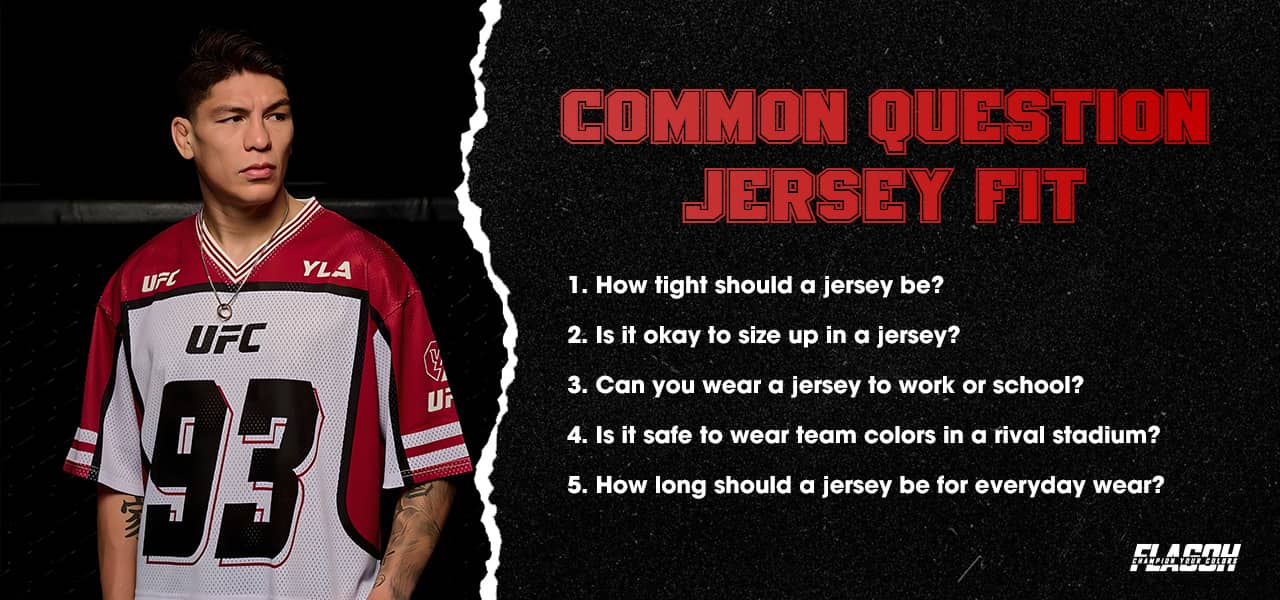
How tight should a jersey be?
It should feel easy to move in without pulling at the shoulders or across the chest. If you can raise your arms and twist without the fabric digging in, the fit is about right.
Is it okay to size up in a jersey?
Yes. Sizing up is common if you prefer a relaxed, streetwear look or want to layer over a hoodie. Just make sure the shoulders don’t drop too far down the arm, and the body doesn’t feel like it’s getting in your way.
Can you wear a jersey to work or school?
It depends on the dress code. Jerseys fit naturally on themed days, casual Fridays, or school spirit events, but in formal offices or classrooms, they’re usually better saved for off-hours or layered under a smarter jacket.
Is it safe to wear team colors in a rival stadium?
Many supporters do, but it pays to be aware of the local culture. Sticking to respectful behavior, avoiding taunts, and staying in mixed or family sections can make the experience more comfortable and enjoyable.
How long should a jersey be for everyday wear?
For casual outfits, aim for a length that doesn’t cover more than the top part of your thighs. If it still shows some of your pockets with jeans or shorts, it usually looks balanced.
When those basics are clear, it’s easier to just enjoy wearing your favorite piece, whether you’re at home, in the stands, or on the road – and if you want to go further, you can play around with pairing jerseys and flags, creating a small game-day corner, or setting up simple displays that fit your space.
Once you’ve answered “what is a jersey” for yourself—from types and fabrics to how it should actually fit—the choice stops being guesswork and starts feeling like part of your own game-day routine. You can pick pieces that match how you watch, travel, and support your team, whether that means one trusted home shirt or a small rotation for different seasons. And if you want to take it a step further by combining jerseys with wall pieces, shelves, or a simple viewing corner at home, resources like FlagOh Fanatics can help you turn that knowledge into a space that feels like your own home field.